
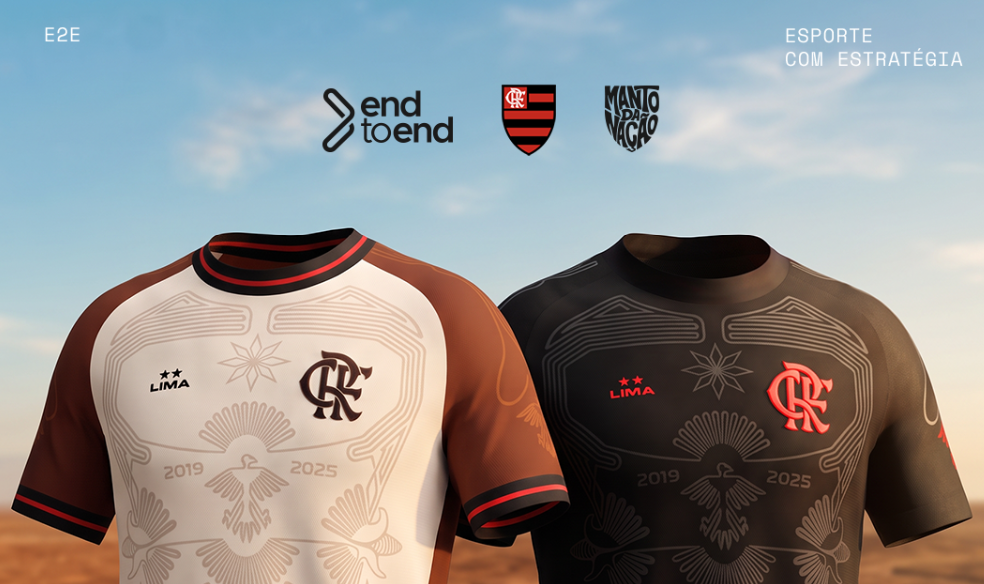
Flamengo had fans design and choose the club’s own jersey, and broke a Guinness World Record doing it. Here’s what the co-creation and conversion behind Manto da Nação can teach.
From a mystery on social media to a national call-up
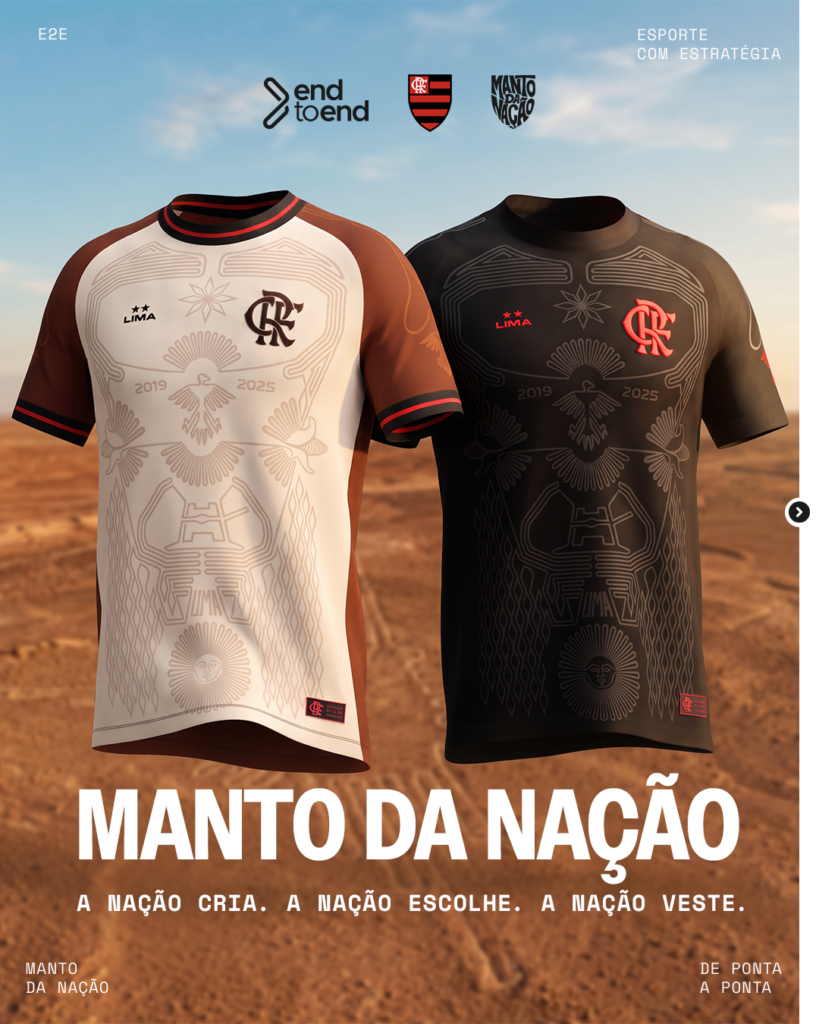
The campaign didn’t start with a product announcement. It started with a mystery spreading across social media: “Is Pedro going to wear a new jersey?” The answer came as a call-up, not a launch: the striker would wear the Manto da Nação, and from that moment thousands of fans were invited to design the club’s next shirt themselves.
That choice, opening with a question instead of a reveal, is the first thing worth noting for anyone working in sports marketing. Unsolicited curiosity turns a passive fan into a curious one, and a curious fan is the only kind that bothers to take part in what comes next.
That choice, opening with a question instead of a reveal, is the first thing worth noting for anyone working in sports marketing. Unsolicited curiosity turns a passive fan into a curious one, and a curious fan is the only kind that bothers to take part in what comes next.
When the fanbase becomes a design studio
More than 8,000 designs were submitted by fans in response to the call-up, a volume no in-house design team would produce alone in a comparable timeframe. Piece after piece, the campaign reinforced a simple message: “you don’t need to be a designer, you just need a good idea.”
That’s the core of what’s usually called co-creation, as much an engagement technology as a product one: by removing the technical barrier to participation, the brand radically widens who can contribute, and every fan who submits a design carries the campaign, on their own, into their own circle. For clubs and brands that depend on organic reach on social media, that multiplier effect is worth more than an equivalent paid media budget.
Gamifying the launch: a deadline, an ambassador, and a record
After receiving the designs, the project didn’t simply pick a winner internally. Zico was brought in as the vote’s ambassador, “5 days left” and “final hours” creative pieces built urgency, and the goal of surpassing 100,000 votes to enter Guinness World Records gave fans a concrete, measurable reason to keep voting and sharing.
Guinness, in this case, wasn’t a stamp added after the fact: the organization tracked the vote in real time and even sent the club a formal letter recognizing the “official attempt.” Turning a product vote into an attempt at a world record is a sports marketing decision as significant as the jersey’s design itself, because it gives the campaign a storyline with a beginning, tension, and a climax, exactly the structure that sustains organic sharing on social media.
From drawing to product: when the jersey carries a story
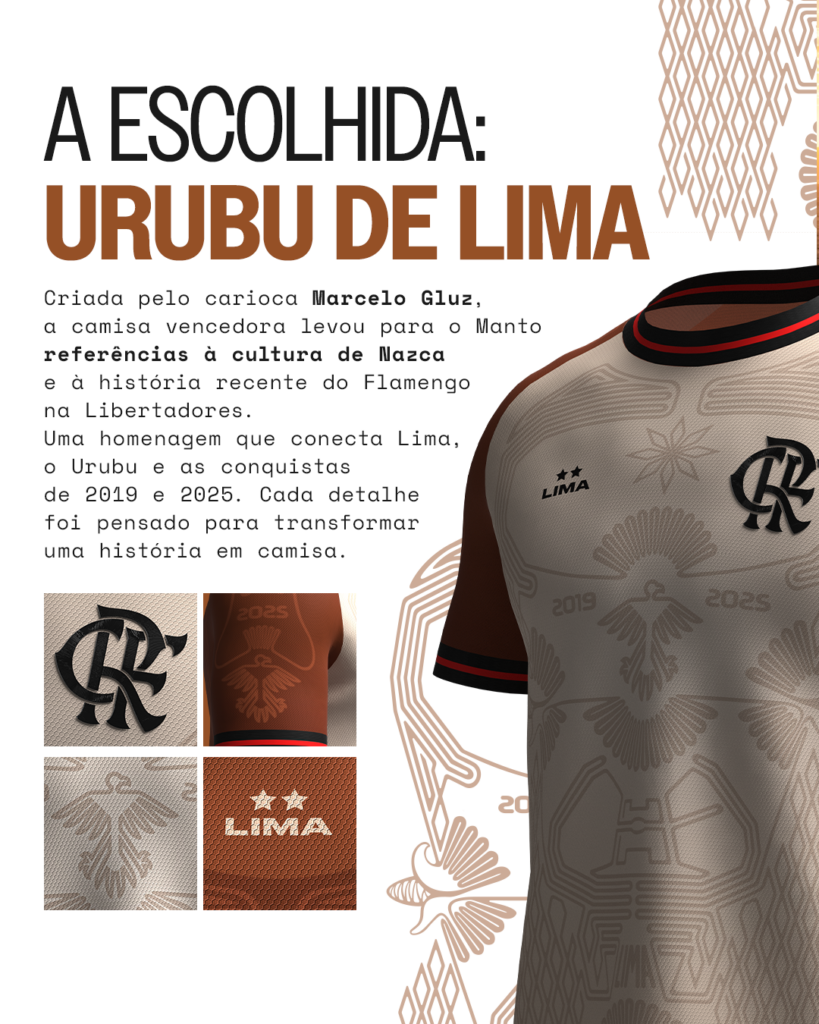
The winning jersey, named “Urubu de Lima” and created by Rio de Janeiro fan Marcelo Gluz, wasn’t chosen on looks alone. It ties together references to Nazca culture, in Peru, and Flamengo’s two Libertadores titles, both won in Lima, creating a narrative effect.
That’s the kind of layer that only shows up when whoever builds the product understands fan culture from the inside, not just as a research target audience. For brands and sponsors seeking genuine relevance in sports, it’s a direct lesson: sports technology and audience data help validate an idea, but it’s the cultural layer, the symbol, the date, the fan in-joke, that turns a product into something a fan feels is truly theirs.
When the fans also choose the color: co-creation’s side effect
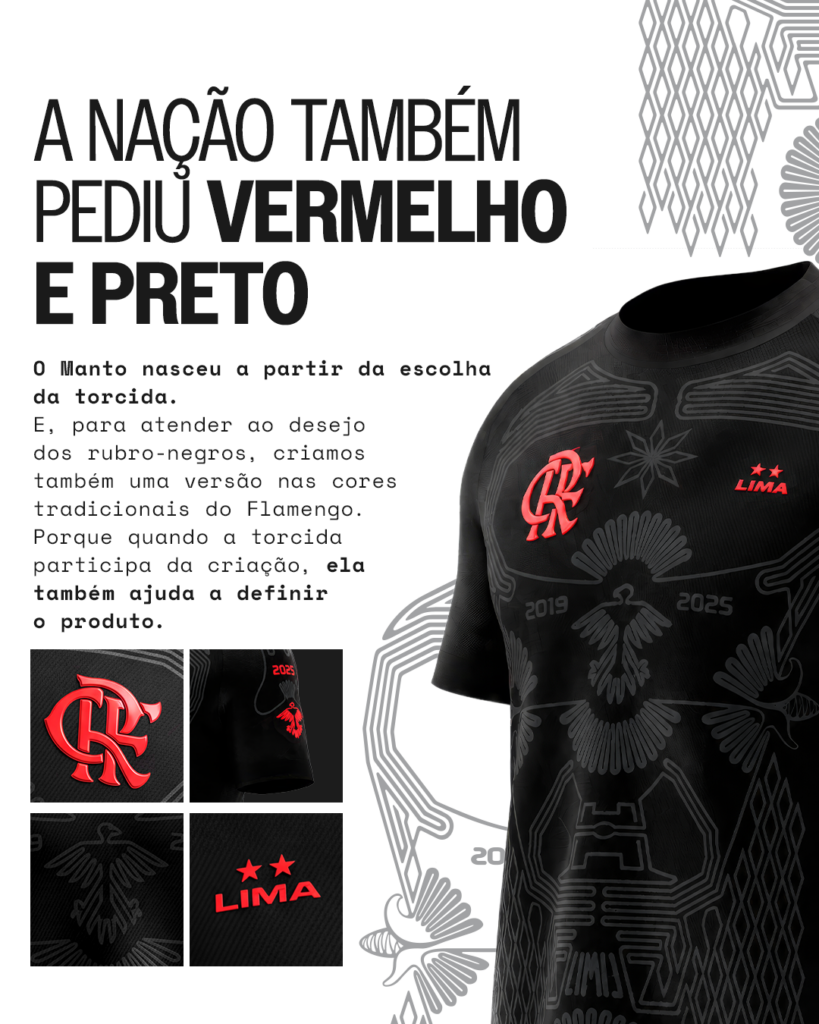
A detail rarely seen in traditional campaigns: after the jersey was chosen, fans themselves asked for a version in the club’s traditional colors, red and black, alongside the original earth-toned colorway inspired by the Nazca desert. Manto da Nação granted the request and released both versions.
This illustrates a point often underestimated in co-creation projects: once fans take part in the creation, they don’t stop weighing in once the product is finished, they keep helping define it even after launch. Brands that treat co-creation as an isolated research step, rather than an ongoing relationship, leave that second layer of value on the table.
From engagement to internationalization and conversion
Votes came in from more than 50 countries, proof that Flamengo’s fanbase scattered around the world was willing to take part in a club decision even from a distance, a relevant data point for any internationalization strategy for Brazilian brands and clubs. And the engagement didn’t stay online: sales batches of the jersey sold out quickly, and commercial partners, including an official betting house, joined the activation with discount coupons tied to the launch.
That’s the closing of the loop that separates an engagement campaign from a business one: the fan who designed, the fan who voted, and the fan who bought can be, literally, the same person. As the campaign itself put it, the project “turned fans into creators, voters, and, in the end, consumers of their own product.”
What brands, clubs, and sponsors can learn from Manto da Nação
The Manto da Nação case shows that well-structured co-creation isn’t an image exercise, it’s a business strategy with clear steps: open up the creative process to fans, gamify the choice with a deadline and a purpose, build a genuine cultural narrative into the final product, keep listening to the audience after launch, and design, from the start, the path between engagement and sales. None of these steps depends on a massive media budget, they depend on strategy, on technology applied to sports to make voting and distribution possible at scale, and on the willingness to share with fans a space that, historically, always belonged only to the club.
For clubs, brands, and sponsors competing for attention in an increasingly international and digital sports landscape, the question left isn’t whether it’s worth bringing fans into the creative process, it’s how much of the decision-making still happens today without them.
If your brand, club, or sponsorship wants to turn fans into the protagonists of a campaign, not just its spectators, talk to the End to End team and let’s build that strategy together.